Himalayas
The Himalayas,[b] or Himalaya,[c] is a mountain range in Asia separating the plains of the Indian subcontinent from the Tibetan Plateau. The range has some of the highest peaks on Earth, including the highest, Mount Everest. More than 100 peaks exceeding elevations of 7,200 metres (23,600 feet) above sea level lie in the Himalayas. The Himalayas span five countries: Nepal, India, China, Bhutan, and Pakistan. The sovereignty of the range in the Kashmir region is disputed among India, Pakistan, and China.[5] The Himalayan range is bordered on the northwest by the Karakoram and Hindu Kush ranges, on the north by the Tibetan Plateau, and on the south by the Indo-Gangetic Plain. Some of the world's major rivers, the Indus, the Ganges, and the Tsangpo–Brahmaputra, rise in the vicinity of the Himalayas, and their combined drainage basin is home to some 600 million people; 53 million people live in the Himalayas.[6] The Himalayas have profoundly shaped the cultures of South Asia and Tibet. Many Himalayan peaks are sacred in Hinduism and Buddhism. The summits of several are off-limits to climbers. These include Kangchenjunga (from the Indian side), Gangkhar Puensum, Machapuchare, and Nanda Devi; and Kailash in the geologically distinct, but nearby Tibetan Transhimalaya. Reference: https://en.wikipedia.org/wiki/Himalayas
 Curated by Monish Singh
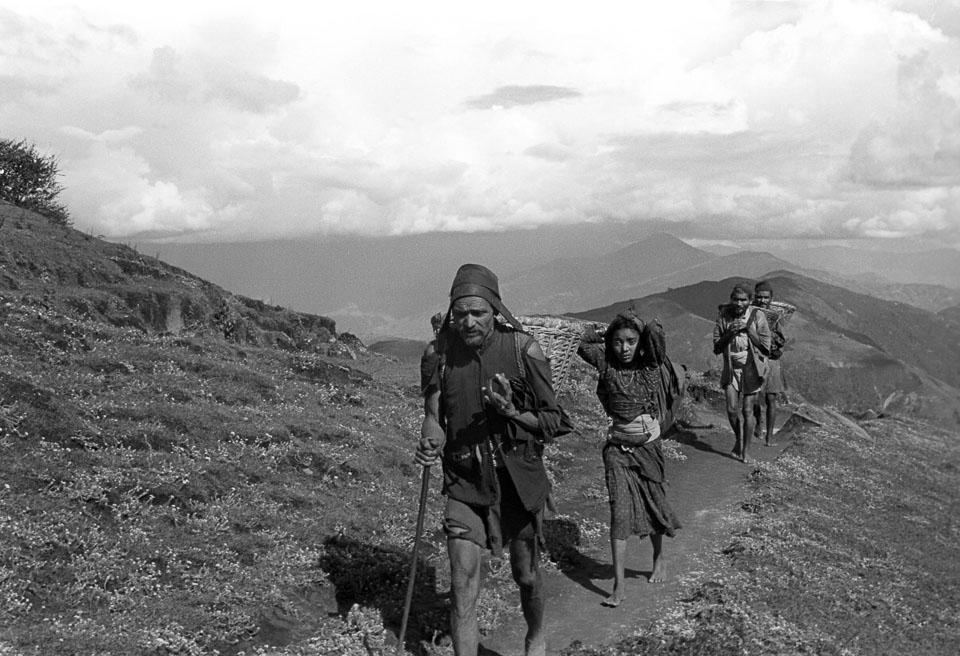
Photo by Chris Walsh
1969

A scenic view of houses on top of mountains
Late 1800s-Early 1950s
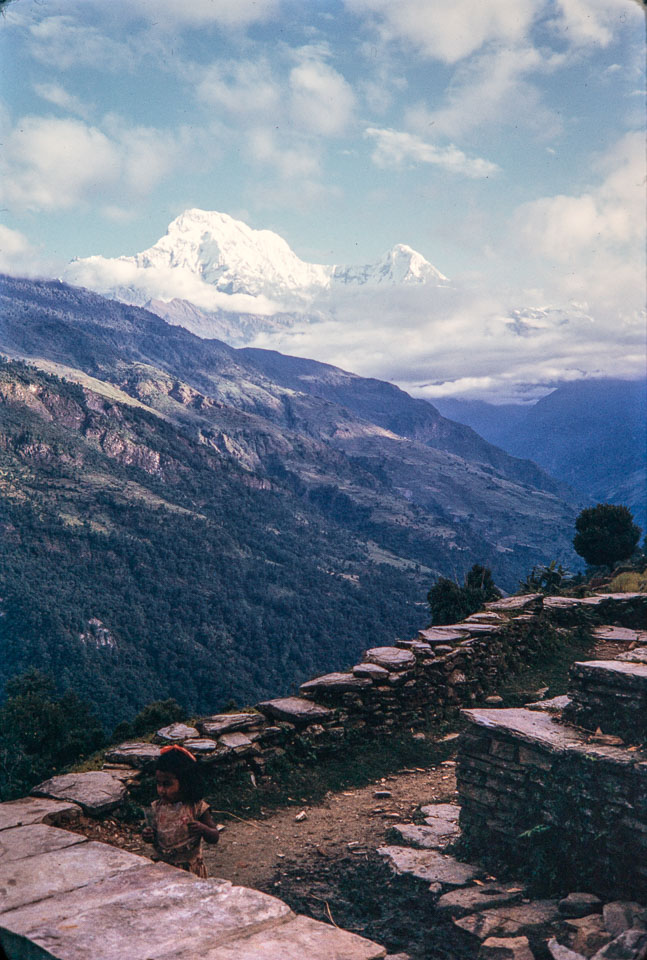
Photo by Rich Pfau
1974

Island Peak #45 Mountain above Dingboche 5-25-75
1975

Manang 1979 #12 Sacred mountain
1979
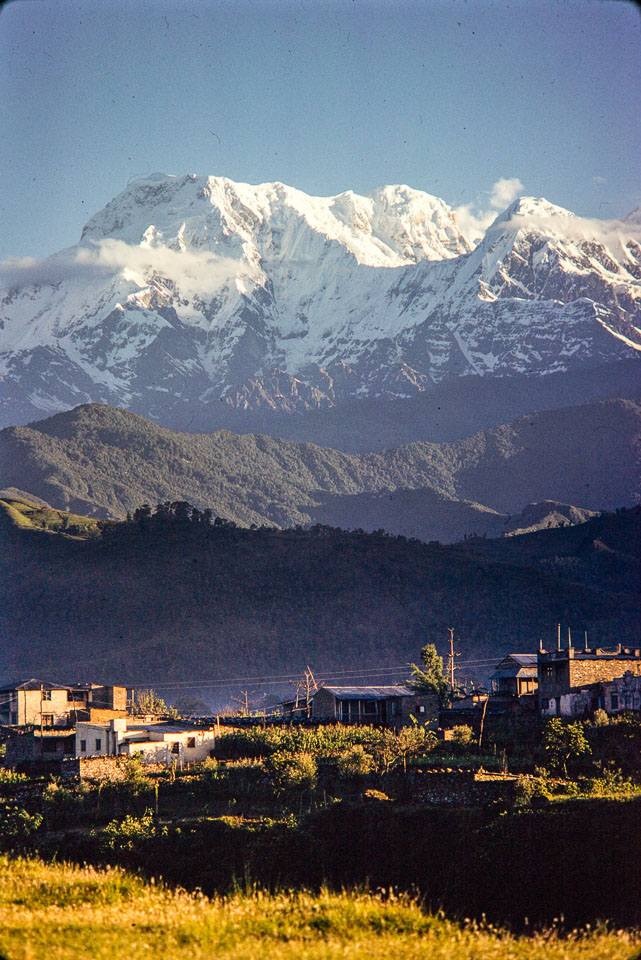
Photo by Rich Pfau
1977

Gokyo #2 Mountain on way to Cho La Pass 6-2-75
1975